
Aurum Logo & Identity
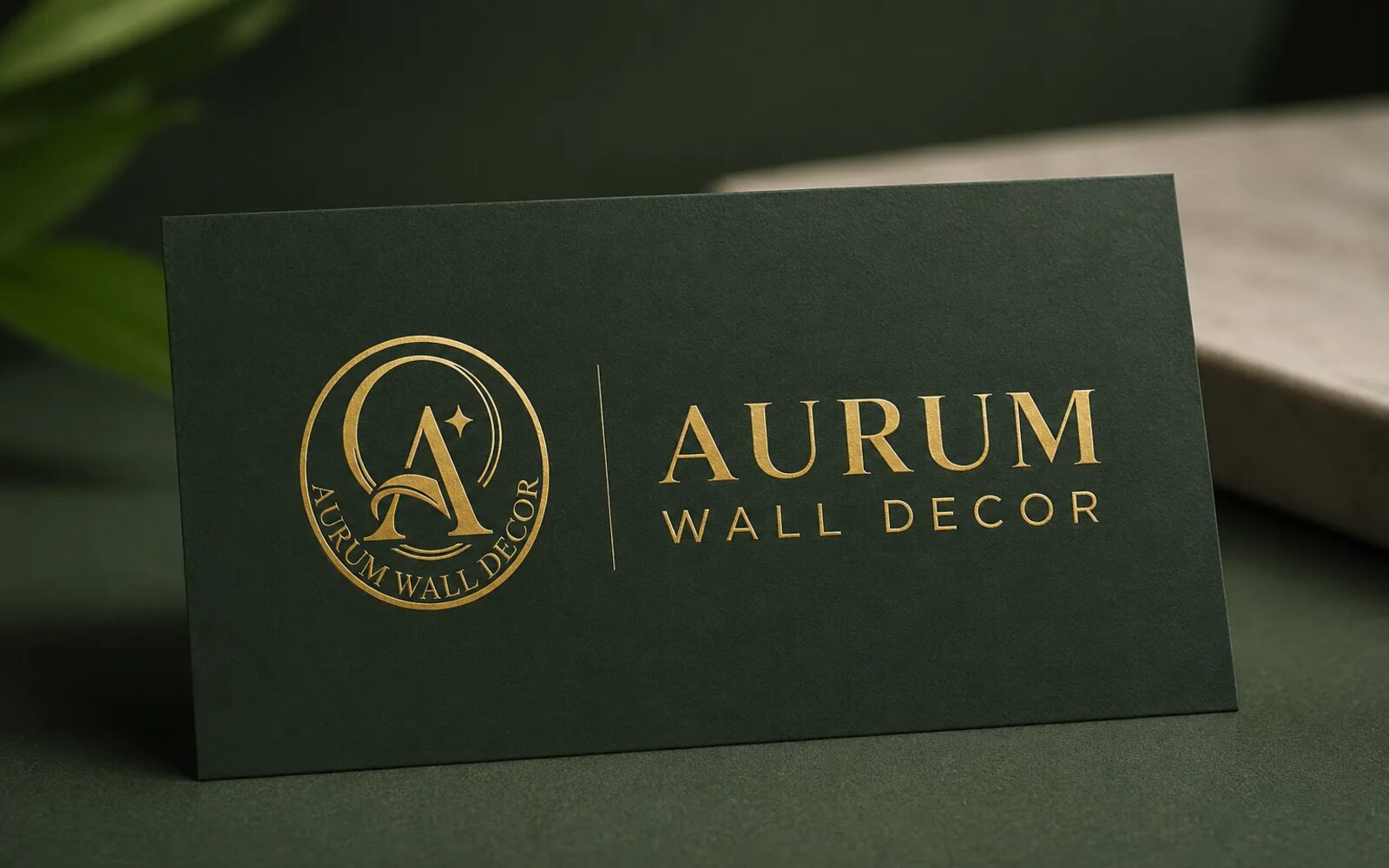
Logo and identity for the same wall-decor label: a monogram built from the A, a restrained metallic palette that survives print, and the packaging language the website inherited.
- Client
- Aurum Wall Decor
- Year
- 2024
- Role
- Identity design
- Type
- Design
What needed solving
A gold-leaf brand has to look metallic without being metallic — the palette had to work in one colour on a carton, in four on a label, and on a screen where 'gold' usually reads as mustard.
How it was built
Built the monogram from the letterform's own geometry rather than an ornament bolted on, so it embosses cleanly.
Defined two palettes: a print set with ink references and a screen set with contrast rules that keep text legible.
Specified the one-colour and blind-emboss versions first, since a mark that fails those is not a mark.
Set the usage on product labels and cartons before the website existed — the site's typography and spacing came from the packaging grid.
What changed
A recognisable letterform across carton, label and screen, and an identity that the later website could extend instead of having to restart from.
The same six stages,
every project
Discovery
Clarify the goal, users, constraints, current systems, success measures, and delivery risks.
Architecture
Choose the right structure, integrations, data model, security boundaries, and technology stack.
Design
Map important journeys and responsive states before expensive decisions are locked in.
Development
Build in reviewable milestones with clean code, documented decisions, and visible progress.
Testing & Launch
Validate functionality, performance, accessibility, security, and production readiness.
Support & Improvement
Monitor real use, resolve issues, and prioritize improvements using evidence.
Other case studies
Brand site for a fitness label: a product story that scrolls instead of clicking, static pages on…
Travel Platform Mad4tripRedesign of a travel booking platform: search, live availability and dynamic pricing in one flow…
B2B Commerce Bitcom E-CommerceB2B wholesale store on Next.js and Stripe: tiered pricing per account, bulk order pads, and a…
Have something similar in mind?
Tell me the outcome you need and the deadline you are working to. I will tell you honestly what is possible.